


A recent cybersecurity incident involving Chick-fil-A serves as another reminder that businesses don’t always need to be hacked for customer accounts to become compromised.
According to recent reports, attackers used a technique known as credential stuffing to gain unauthorized access to customer accounts by testing usernames and passwords that had already been stolen during unrelated data breaches. Rather than exploiting Chick-fil-A’s internal systems, criminals simply took advantage of one of the biggest security problems on the internet: password reuse.
While the incident primarily impacted customer loyalty accounts, the lessons extend far beyond the restaurant industry. Every organization with online accounts, whether it’s a healthcare provider, financial institution, manufacturer, or small business, faces the same risk.
What Is a Credential Stuffing Attack?
Credential stuffing is an automated cyberattack in which criminals use usernames and passwords stolen from previous data breaches and attempt to log into other websites and applications.
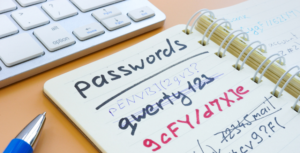
The attack works because many people reuse the same password across multiple accounts.
For example:
- A password is stolen during a breach at Website A.
- The attacker uses automated software to try that same username and password on hundreds of other websites.
- If the password has been reused, the attacker gains immediate access—without needing to hack the organization’s network.
This is one of the reasons cybersecurity professionals continually emphasize using unique passwords for every account.
 Why This Attack Is So Effective
Credential stuffing doesn’t rely on sophisticated malware or advanced hacking techniques.
Instead, it exploits normal human behavior.
Many people reuse passwords because it’s convenient. Unfortunately, that convenience creates an opportunity for cybercriminals.
According to Chick-fil-A’s disclosure, attackers accessed customer accounts using credentials obtained from a third-party source rather than compromising Chick-fil-A’s own infrastructure. Information potentially exposed included customer names, email addresses, loyalty account information, payment details, and in some cases phone numbers and addresses.
Why Businesses Should Pay Attention
It’s easy to dismiss incidents involving retail or restaurant loyalty accounts as minor inconveniences.
They’re not.
Credential stuffing attacks are used against:
- Microsoft 365 accounts
- VPNs
- Remote Desktop services
- Banking applications
- Healthcare portals
- Customer portals
- Cloud applications
- Business email accounts
If an employee reuses a password that was exposed in an unrelated breach, attackers may gain access to business systems without ever exploiting a software vulnerability. This is why many organizations invest in managed cybersecurity services that continuously monitor authentication activity and respond to suspicious behavior before attackers can move deeper into the network.
That’s one reason credential theft continues to be a leading cause of security incidents worldwide.
What Can Businesses Do to Reduce Their Risk?
While no organization can prevent every credential stuffing attempt, there are several proven steps that dramatically reduce the likelihood of a successful attack.
 1. Require Multi-Factor Authentication (MFA)
MFA adds another layer of verification beyond a password. Organizations using Microsoft 365 should ensure multi-factor authentication is enabled for every user, especially administrators and anyone with remote access. Even if an attacker has valid credentials, they typically cannot log in without the second authentication factor.
2. Eliminate Password Reuse
Encourage employees to use unique passwords for every account.
Password managers make this significantly easier while improving overall security.
3. Monitor for Suspicious Login Activity
Organizations should monitor for:
- Impossible travel logins
- Multiple failed login attempts
- Logins from unusual locations
- Automated authentication attempts
- Abnormal user behavior
Around-the-clock monitoring is one reason many businesses partner with a managed IT provider that can identify unusual login activity before it becomes a larger security incident.
4. Regularly Reset Compromised Credentials
Businesses should have processes in place to identify accounts using credentials that have appeared in known data breaches and require password changes when appropriate.
5. Educate Employees
Technology alone isn’t enough.
Regular cybersecurity awareness training helps employees understand:
- Why password reuse is dangerous
- How phishing attacks steal credentials
- Why MFA matters
- How attackers target business accounts
Employee education remains one of the most effective cybersecurity investments organizations can make.
The Bigger Picture
Credential stuffing attacks continue to grow because they don’t require attackers to break into an organization’s systems. Instead, they exploit credentials that have already been compromised elsewhere.
As businesses rapidly adopt AI tools, identity security becomes even more important because compromised accounts can expose sensitive AI conversations, documents, and business data. In our recent article on AI Cybersecurity Risks Businesses Overlook, we explore how identity threats are evolving alongside AI adoption.
The Chick-fil-A incident is another reminder that cybersecurity isn’t only about preventing breaches, it’s also about reducing the impact when credentials inevitably become exposed somewhere else.
A Message from Enitech
“Most organizations spend a lot of time worrying about sophisticated cyberattacks, but many breaches begin with something much simpler—a reused password. Credential stuffing is successful because it targets people, not technology. By combining strong password policies, multi-factor authentication, and continuous security monitoring, businesses can dramatically reduce their risk before attackers ever get through the front door.”
— Antwine Jackson, President, Enitech Solutions
 Don’t Wait Until Your Credentials Are the Next Target
Credential stuffing attacks are preventable, but only if organizations take proactive steps to secure user identities before attackers test stolen credentials against their systems.
If you’re unsure whether your organization has the right safeguards in place, Enitech can evaluate your current security posture, strengthen identity protection, and implement layered defenses that reduce the risk of account compromise.
Whether you need managed IT services, managed cybersecurity, or want to begin with a free AI Readiness Assessment, our team can help you identify risks before attackers do.
Schedule a cybersecurity consultation with Enitech today and make sure your first line of defense isn’t your weakest one.