
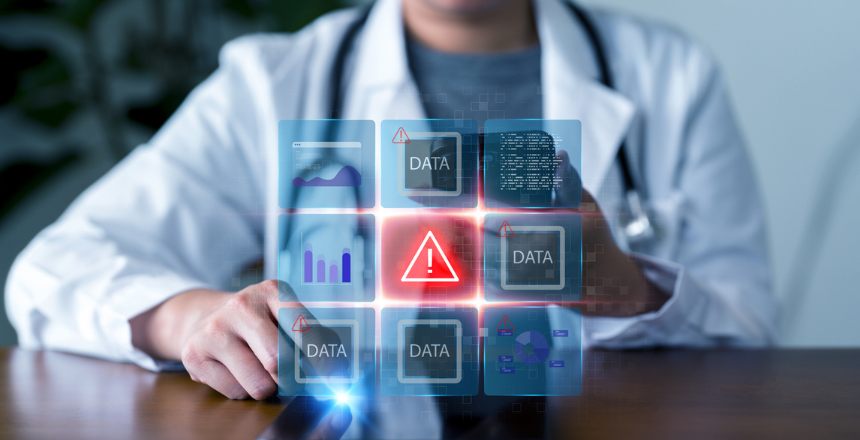
Healthcare organizations continue to face relentless cyber threats, and the latest breach involving healthcare technology company Xsolis is another reminder that even organizations with sophisticated technology are vulnerable to phishing attacks.
According to reports, a targeted phishing attack against Xsolis ultimately exposed sensitive information belonging to nearly 1.4 million individuals. While Xsolis has stated there is no evidence the data has been misused, the incident demonstrates just how quickly a single compromised account can lead to widespread exposure of protected health information (PHI).
For hospitals, physician practices, specialty clinics, and healthcare organizations, the lesson is clear: cybersecurity isn’t just about protecting systems. It’s about protecting patient trust.
That’s why partnering with an experienced healthcare MSP has become one of the most important investments a medical organization can make.
What Happened?
Xsolis develops AI-powered healthcare software used by hundreds of hospitals and healthcare organizations across the United States to support utilization management, patient status reviews, and care coordination.
According to the company’s disclosure, attackers gained access to its environment through a targeted phishing attack. The incident was detected shortly afterward, but investigators later determined that sensitive information belonging to approximately 1.4 million people had been exposed. The compromised information may have included:
- Patient names
- Dates of birth
- Addresses
- Social Security numbers
- Health insurance information
- Medical treatment information
While no misuse has been publicly reported, stolen healthcare information often remains valuable to cybercriminals for months or even years because it can be used for identity theft, insurance fraud, and targeted phishing campaigns.
Healthcare Cybersecurity by the Numbers
Healthcare organizations remain one of the most frequently targeted industries for cyberattacks, and the numbers highlight why cybersecurity has become a strategic priority not just an IT concern.
- Healthcare experienced the highest average cost of a data breach for the 14th consecutive year. According to IBM’s Cost of a Data Breach Report 2025, the average healthcare data breach cost reached $7.42 million, making it the most expensive industry for cyber incidents.
- Large healthcare data breaches continue to impact millions of patients every year. The U.S. Department of Health and Human Services (HHS) maintains a public breach reporting portal that tracks incidents affecting 500 or more individuals, demonstrating the ongoing volume of attacks against healthcare organizations.
- Phishing remains one of the leading ways attackers gain access to healthcare networks. The Cybersecurity and Infrastructure Security Agency (CISA) continues to identify phishing, stolen credentials, and social engineering as common initial attack vectors used against critical infrastructure organizations, including healthcare providers.
These statistics reinforce an important reality: cybercriminals are increasingly targeting healthcare organizations because they know medical data is valuable and healthcare operations cannot afford prolonged downtime. Working with an experienced healthcare MSP can help organizations reduce risk through proactive monitoring, employee security awareness training, stronger identity protection, and rapid incident response before a phishing attack turns into a costly breach.
 Why Healthcare Continues to Be a Prime Target
Healthcare organizations have become one of the most attractive targets for cybercriminals.
Unlike financial information, medical records cannot simply be canceled and reissued. Healthcare data contains long-term personal identifiers, insurance details, and clinical information that can be exploited in multiple ways.
Healthcare organizations also face unique challenges:
- Large numbers of employees accessing sensitive data
- Connected medical devices and clinical systems
- Third-party vendors handling patient information
- Strict HIPAA compliance requirements
- Limited internal cybersecurity resources
As healthcare environments become more connected, every employee, vendor, and endpoint creates another potential attack surface.
One Phishing Email Can Disrupt Patient Care
Many cyberattacks begin with something surprisingly simple: a convincing email.
An employee clicks a malicious link, opens an infected attachment, or unknowingly enters credentials into a fake login page. Within minutes, attackers may gain access to systems containing sensitive patient information.
The consequences extend far beyond IT:
- Disrupted patient care
- Operational downtime
- HIPAA investigations
- Regulatory penalties
- Costly breach notifications
- Damage to an organization’s reputation
- Loss of patient confidence
Healthcare organizations cannot afford to treat phishing awareness as optional training. It has become an essential part of protecting patient care.
 Why Every Healthcare Organization Needs a Healthcare MSP
Technology alone cannot stop every cyberattack.
An experienced healthcare MSP combines technology, processes, and ongoing monitoring to reduce the likelihood that a phishing email becomes a major security incident.
Key services include:
24/7 Security Monitoring
Continuous monitoring helps identify suspicious activity before attackers can move deeper into the network.
Learn more about Enitech’s Cybersecurity Services: https://enitechsolutions.com/service/cybersecurity-services/
Advanced Email Protection
Modern email security blocks malicious attachments, suspicious links, spoofed domains, and business email compromise attempts before they reach employees.
Security Awareness Training
Employees remain the first line of defense.
Regular phishing simulations and security awareness training help staff recognize increasingly sophisticated attacks before they become incidents.
Multi-Factor Authentication (MFA)
Even if credentials are stolen, MFA adds another layer of protection that significantly reduces the likelihood of unauthorized access.
Endpoint Detection & Response (EDR)
Every workstation, laptop, and server should be monitored for suspicious behavior, allowing security teams to isolate compromised devices quickly.
Backup & Disaster Recovery
Even the strongest defenses cannot guarantee prevention.
Reliable backups ensure healthcare organizations can recover quickly and minimize downtime following an incident.
HIPAA-Focused Security
Healthcare organizations require cybersecurity strategies that align with HIPAA requirements while protecting patient information.
Seven Questions Every Healthcare Organization Should Ask Their IT Provider
Whether you currently work with an internal IT department or an outside provider, ask these questions:
- How quickly can suspicious activity be detected?
- Is multi-factor authentication enforced across all critical systems?
- Do employees receive ongoing phishing awareness training?
- Are backups tested regularly?
- How are third-party vendors evaluated for cybersecurity risks?
- Is there a documented incident response plan?
- Are HIPAA security requirements reviewed on a regular basis?
If any of these questions are difficult to answer, your organization may have opportunities to strengthen its cybersecurity posture.
Expert Insight
“Healthcare organizations can’t afford to think of cybersecurity as simply an IT expense. It’s a patient care issue. Every minute spent responding to a cyberattack is time that can impact clinicians, staff, and ultimately patients. The right healthcare MSP helps reduce risk before an incident ever occurs.”
— Antwine Jackson, President, Enitech
Final Thoughts
The Xsolis breach is another reminder that cybercriminals continue to exploit the human element through phishing attacks.
No organization can eliminate every threat, but healthcare providers can dramatically reduce their risk through proactive cybersecurity, employee training, continuous monitoring, and strong incident response planning.
Partnering with a trusted healthcare MSP gives healthcare organizations the expertise and resources needed to protect patient information, maintain HIPAA compliance, and keep critical systems running when it matters most.
If you’d like to evaluate your organization’s cybersecurity posture, contact us to schedule a healthcare cybersecurity assessment.